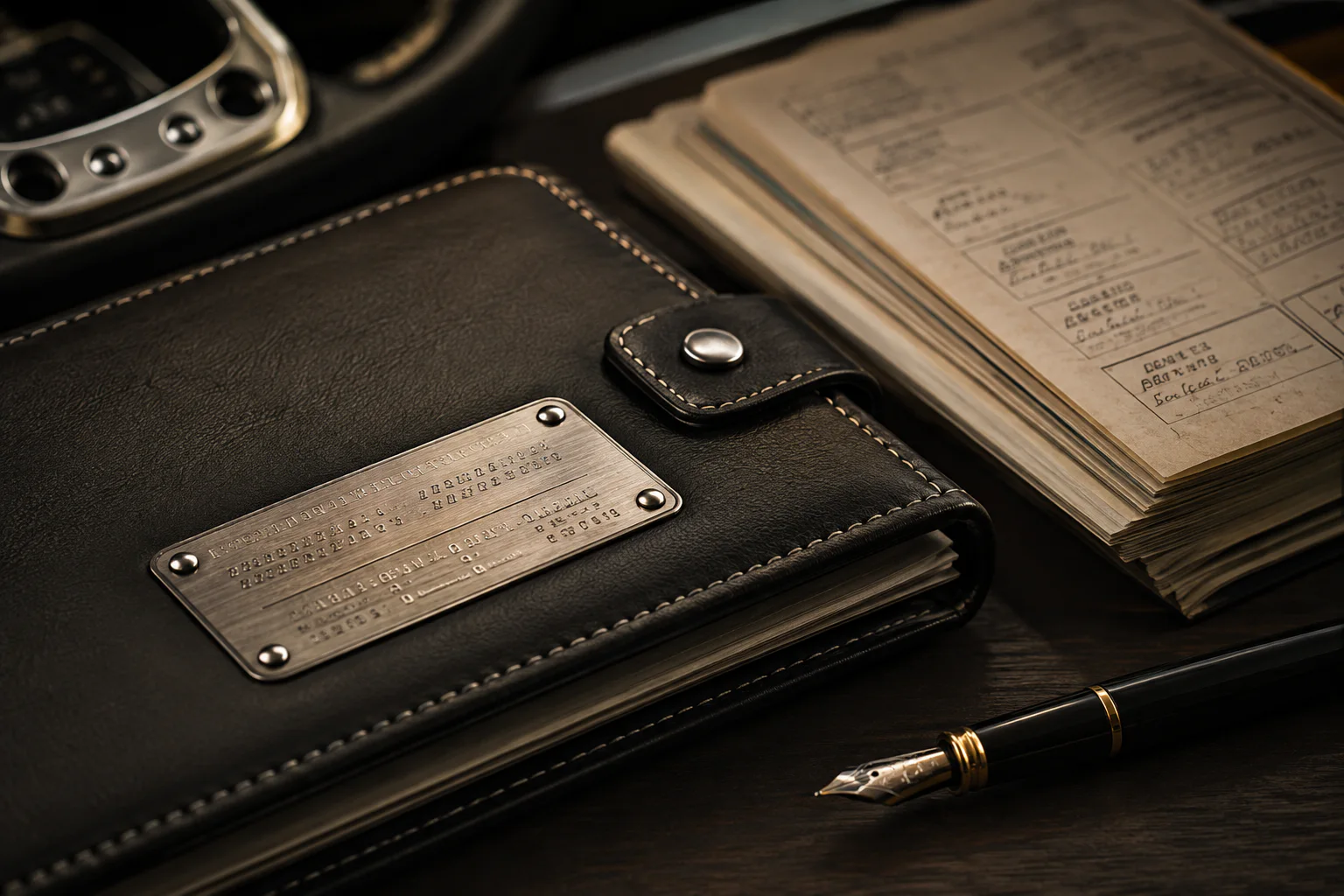
Build a chronology before forming an opinion
Start with a timeline of first registration, changes of ownership, scheduled services, repairs, inspections and the date the car was offered for sale. A gap is not automatically a problem, but it is a question to answer with evidence where possible.
For an imported vehicle, note the markets in which it was registered and request the relevant import and registration paperwork. The purpose is to understand which records should exist and where maintenance took place.
Look for consistency across records
Vehicle identification, registration dates and mileage should agree across the available documents. Service stamps become more informative when accompanied by invoices showing the date, recorded mileage and work completed.
Include routine and non-routine work. Records for tyres, batteries, brakes, suspension components and software updates can help explain how the car was maintained between scheduled services.
Let condition test the narrative
Documentation and physical condition should support one another. An independent specialist can inspect paint depth, panel alignment, underbody condition, diagnostic records, wear items and the operation of cabin equipment.
Request written findings and distinguish observations from estimates. When remedial work is suggested, confirm its scope and cost with an appropriate workshop before treating it as part of the purchase budget.
Finish with a one-page provenance brief
Reduce the file to what is documented, what has been independently checked and what remains unverified. A concise brief makes comparison easier and gives the next owner a useful structure for preserving the car's records.
- Confirmed registration and ownership chronology
- Service events supported by dated records and invoices
- Repairs or modifications with supporting documentation
- Inspection findings and unresolved observations
- Original documents, keys, manuals and accessories at handover